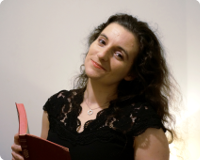
Check out my Adventures in Australia blog posts from Ana Travels the World.
I also made a cool film about it, enjoy!
Check out my Adventures in Australia blog posts from Ana Travels the World.
I also made a cool film about it, enjoy!
The question raised in this work is how can a detective agent discover another agent’s strategy of movement as quickly as possible? The detective has to find and follow footprints and go through locked doors to find the culprit, before he gets away. The project is also known as the Sherlock project, but can it become Sherlock? Time will tell.
This exercise is meant to be a combination of graphics programming for simulating interaction between agents, goal finding algorithms and artificial intelligence. Thus the results from my work could be added alongside research in path finding and behaviour algorithms used for game or virtual reality agents, robotics and could even be a start for crowd simulation behaviour.
Having an agent follow a given target is one issue, but having an agent follow an unknown target by detecting clues or by dynamically discovering the environment is a whole different story. This concept seems to be separating from the virtual world as it blends more into a natural behaviour of real people.
Apart from curiosity, other reasons for choosing this topic would be the opportunity of training a program to discover a world in pursuit of a goal, while preparing its knowledge base for other possible trajectories. Abstract or maybe futuristic uses for this topic would be in robotics, creating a detective machine that can scan an area and look for clues much more accurately, form theories based on previous research and work hand in hand with a detective.
The same strategies can be used for a robotic companion who can play “hide and seek” with a child with communication problems, for example, or who can follow an elderly owner around the house (or an unknown location) when needed. An even more abstract idea would be of adopting the same theory in areas like medicine, where a nanobot with a tracking algorithm such as this could be trained to make it’s way around the human body and detect traces of infections or viral activity.
It’s started. A journey of procedural, emotive animation has started. First off, I will release the curious cones. Check out their pretty little faces below.
Details about the algorithm can be found on my inventions blog.
More to come soon!
After a few years of a rather painful experience as a PhD student, or should I say Engineering Doctorate (EngD) student, which is even more demanding, I have some thoughts I’d like to share. I do not wish to be ungrateful for the experience and support I have been given, financially and on an advisory level, but there are some things that have changed my feeling towards what I though academia was.
Firstly, why do I say doing an EngD is even more demanding than doing a PhD? It’s because after one year of confusion, where you’re deciding on which topic you would like to pursue, you end up doing something marginally close to your heart. Don’t get me wrong, I have colleagues who absolutely love what they do and it is a pleasure to see their progress throughout the 4 years. But these cases are very rare and often people settle to working on a project they like, but don’t feel passionate about. One year at university, one year where you make friends and where you find out what makes you tick and then you move to a different city where you have to start over. When it works, it can be miraculous and you also get industry experience, awesome! But when it doesn’t work so well, one can feel very isolated.
I feel I’m complaining a lot these days and I do not like this sobby version of Ana, I do apologize. I wish I could restore myself to a previous version, the version that fell in love with animation after watching Finding Nemo in 2004. My life, unfortunately, does not have version control so I have to keep overriding my mind with happier experiences. If doing an EngD isn’t hard enough, try adding a broken relationship, changing supervisors 3 times and your company shutting down after 2 years on placement (for an EngD, placement lasts for 3 years).
The biggest obstacle, however, is realizing that there is a huge difference between research and academia. The word itself, “research” means to search again, to fail a lot (Thomas Edison comes to mind), to discover, to explore, to create. Academia means to publish. Research is, or at least should be, the biggest part of academic studies. Students should be encouraged and helped, especially at the beginning of their PhD to “do the scary thing, fight the monster” (Jacob Banigan) and fail happily. Linking in to the philosophy I have learnt in improvised theatre, “There are no mistakes, just opportunities.” (Tina Fey).
Constraints like time running out, feeling guilty for wasting resources, the impostor syndrome generate fear or at least stress. A mind subdued to long periods of negative emotions such as these will not be inclided to create. I am currently talking from personal experience and from what I have observed, but I am sure there are a lot of references out there, for the more scrutinous amongst us. The high level of depression in academia is very real and has been overlooked far enough.
I believe there should be a change, a revolution even, in the way academia is structured. My inspiration is improvised theatre (impro), where I have found a supportive and fun atmosphere to explore storytelling and ideas. Keith Johnstone, one of the founders of this art form introduced the notion of “happy fail”, where we actually celebrate failure. In impro, people say “yes and”, in academia people say “yes but”. In impro people collaborate, in academia people compete. In impro people actively play and interact, in academia people sit at conferences with an invisible wall between them and the presenter. Lastly, in impro, people feel happy to explore, in academia, people feel fearful to share their work.
I don’t know about you, but I am starting to see a pattern emerging. Academia should be about research and research should be about exploration, collaboration, discovery, creation and, most importantly, happy fails. Results should be just as important as failures. Ideas should be just as important as publications. Funding shouldn’t be seen as a salary, but as support towards the creative process. People shouldn’t be telling audience members what they’re doing, but should be actively showing them and bringing them into their circle.
Alas, where are the days when pubs used to be public places, where people would share their amazing discoveries informally, where the truth really comes out? Of course, some level of formality is required, we don’t want a group of drunk academics playing football with the audience, while explaining relativity. But we do need to make research fun again and only then will it become truthful, because “the truth is funny” (Del Close) and also memorable.
On the round side of the Earth
Lived spheres of many a girth,
They all were very proud
Of their land, which was very round.
On an apparently circular day
A good hearted cube came along to play,
He was sharp in thought and flat in voice,
The small girthed spheres did not rejoice.
They listened not to his warm thought
And didn’t see the life he sought,
They took a rounded rock and said,
‘Let’s make this cube a sphere instead!’
(From Formal and Polite)
That’s me at this year’s CDE conference, where I had to present my research in a Fast Forward (90 seconds) , along with about 40 other students.
Thank you Iain for taking the photo!
Anamaria, brilliantly presented her 3D Stop Motion research project at the CDE celebration event today. #handmadetech http://t.co/7dqHTllip7—
Fat Pebble (@FatPebble) April 15, 2015
…which is what one of my favorite Animation professors wrote on my review sheet one day, instead of the actual word. He made a tiny mistake, I thought it would make a brilliant name for an animation studio or a hacker-space, or a blog…who knows 🙂 My name is Anamaria Ciucanu, by the way and I come from the lovely town of Piatra-Neamt, Romania. See the About section form more technical details 😉
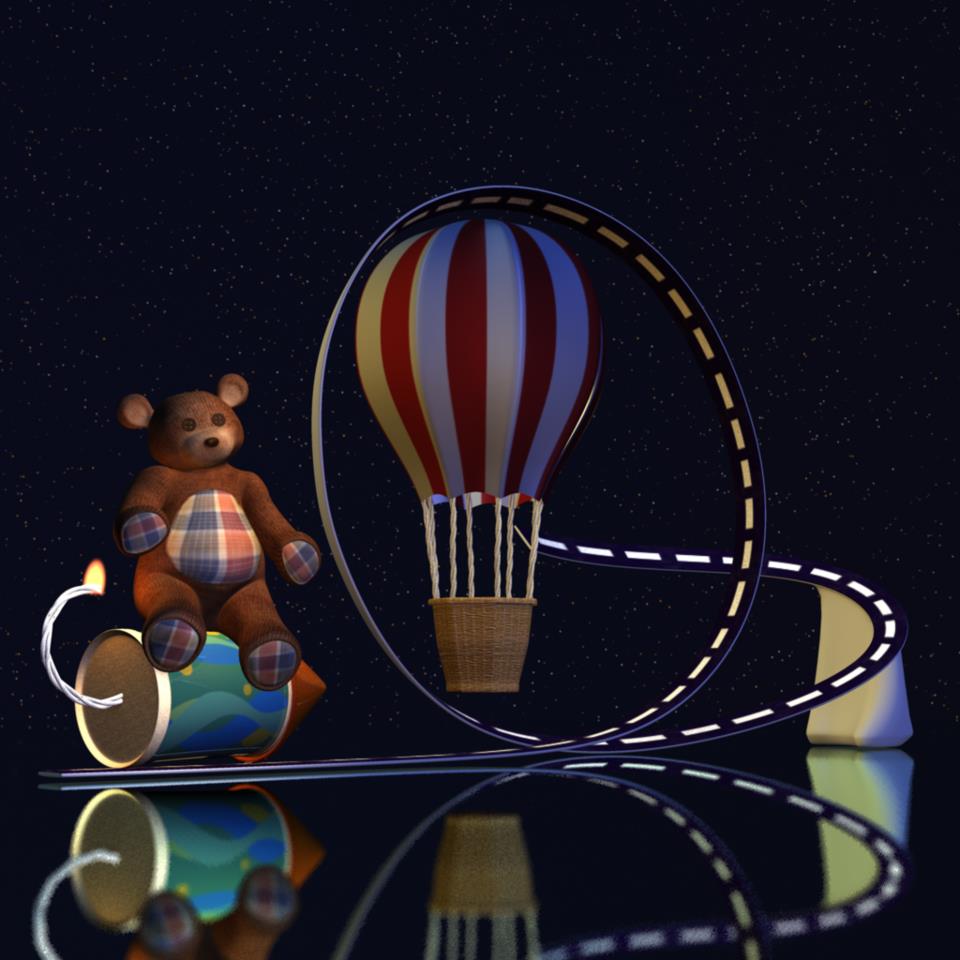
Teddy’s Dream – Created in Maya, year 2012
 Dr Anamaria Weston